


Harden Machinery’s Three Low-OPEX Solutions Anchor a New Path for RDF Cost Reduction

On June 5, 2026, the 3rd Alternative Fuel Production and Application Technology Exchange Conference opened grandly in Nanjing.
Bringing together over 300 senior experts and industry representatives, the summit focused on technical seminars and real-world applications.
Attendees engaged in deep discussions regarding the trend toward high-substitution, large-scale alternative fuel utilization, working together to drive industry application technologies toward higher standardization.
As a pioneer deeply rooted in solid waste recycling and alternative fuel preparation, Zhongshan Harden Environmental Technology Co., Ltd. (Harden Machinery) was invited to attend.
Drawing on 16 years of domestic and international project execution and technical expertise, Harden launched its low-OPEX alternative fuel preparation technologies centered around the core value of "Lower Cost Per Ton, Higher Competitive Barriers."

The introduction of three innovative solutions injects fresh momentum into the industry's cost reduction, efficiency optimization, and high-quality development.
From Bulk Processing to Refined Sorting
The industry has evolved from the energy-intensive, backward production lines of early days—characterized by rough primary shredding and multi-stage crushing—to today’s modular, intelligent, and low-cost refined turn-key processes.
Addressing current industry pain points and the demand for high-ratio, large-scale alternative fuel application in cement kilns, Harden has continuously iterated and upgraded its products.
The company has introduced three tailored solutions: Single-Step Shredding, the DDS Three-Stage Shredding System, and the DSWS High-Quality Alternative Fuel Preparation System.
Covering a full throughput capacity range from 50 to 600 tonnes per day (t/d), these solutions offer a one-stop remedy for industry challenges such as footprint constraints, mixed complex feedstocks, non-compliant output particle size, uneven calorific value, high equipment failure rates, and stubbornly high processing costs per ton.

Three Low-OPEX Alternative Fuel Preparation Solutions
Solution 1: SG3000MP Single-Step Shredding System
Target Scenarios: Small and medium-sized alternative fuel preparation plants. Capacity: 50–200 t/d.
Traditional small and medium-sized RDF projects have long been plagued by four major bottlenecks:
Tight plant footprints and limited on-site power supply conditions;
Complex mixed incoming waste, where hard-to-shred materials degrade output fuel quality;
Multi-stage machine configurations that drive up processing fees per ton;
Excessive standalone equipment units, leading to frequent downtime and sky-high O&M (operation and maintenance) costs.
Harden pioneered the SG3000MP single-step integrated shredding system, completely disrupting the traditional multi-stage, multi-equipment process.

This single machine integrates fine shredding and an intelligent electronic control unit. The entire system occupies an area of only 105 m²—an 82% reduction in footprint compared to traditional production lines—making it a perfect fit for small facility retrofits and space-constrained projects.

Key Cost-Reduction Advantages:
30% reduction in life-cycle TCO (Total Cost of Ownership) and a 30% cut in energy consumption per unit, slashing production costs directly from the energy side.
Blade lifespan extended by 20%, significantly reducing the replacement frequency of wear parts and lowering spare parts OPEX.
95% compliance rate for output particle size, with the overall equipment utilization rate stabilizing above 92%, eliminating waste caused by repeated rework of non-compliant materials.
Solution 2: DDS Three-Stage Shredding System
Target Scenarios: Large-scale alternative fuel preparation hubs. Capacity: 300–500 t/d (hourly output up to 15–30 t/h).
Large-scale RDF plants generally face severe operational bottlenecks:
High variety of feedstock source material; bulky waste textiles and entangled materials cannot be processed on a large scale.
Complex multi-unit serial configurations that increase operational management difficulty and overall costs.

Inconsistent output particle size, which clogs the feeding belts of cement kilns and lowers the fuel burnout rate, severely restricting the co-processing ratio and slashing project returns.
As a nation-first, the DDS three-stage shredding turn-key process is custom-developed for high-capacity, high-standard kiln-ready fuel.
Powered by patented fractional shredding + energy recovery technology, it achieves a 95% broad-spectrum feedstock adaptability. Complex materials such as municipal solid waste (MSW), mixed industrial solid waste, and textile waste can all be processed reliably.
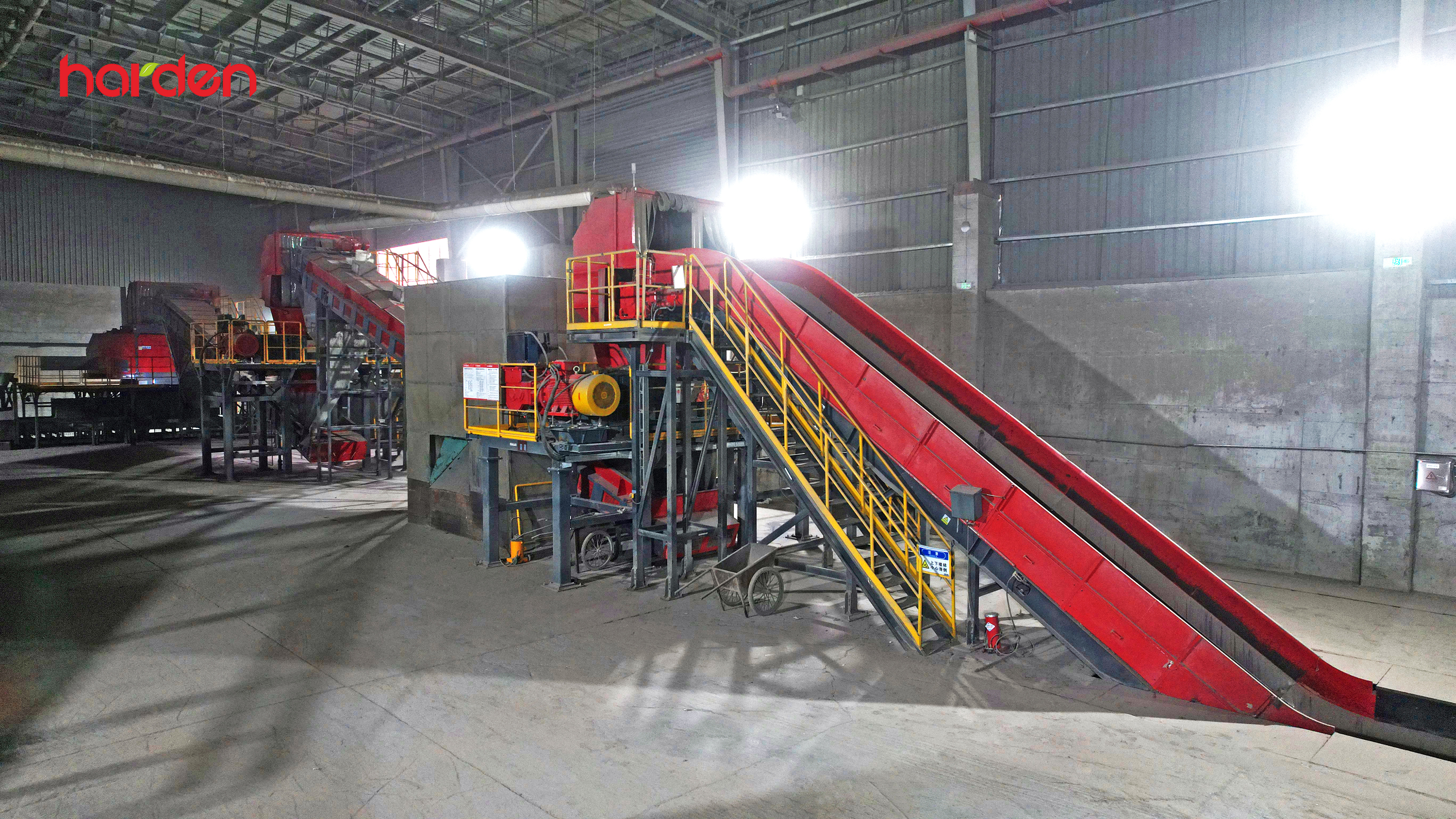
The qualification rate for the 80 mm output fuel size is as high as 98%, perfectly matching cement kiln inlet standards and eliminating co-processing bottlenecks at the source.
Technical Highlights:
Equipped with an AI-driven collaborative smart control system, significantly reducing manual supervision and optimizing labor cost
Backed by energy recovery technology, processing energy consumption is controlled at 13–18 kWh/t, a 26% drop compared to traditional processes.
Full-process modular layout ensures strong equipment interlocking stability, making it highly suitable for large-scale alternative fuel production lines built and operated by cement groups.
Solution 3: DSWS High-Quality Alternative Fuel System
Target Scenarios: Premium alternative fuel projects, catering to coal-consuming enterprises with strict requirements and high substitution rates.
Most solid waste feedstocks on the market consist of highly mixed materials. MSW, commercial & demolition (C&D) light fractions, and mixed industrial solid waste contain high proportions of inert materials, soil, and debris. Direct shredding results in low calorific value and excessive hazardous elements, failing to meet the stringent procurement standards of high-end kilns.

Harden’s proprietary DSWS multi-stage refined sorting system creates a closed-loop process of "Pre-shredding → Size Screening → Light/Heavy Air Separation → Fine Shredding." It strips out impurities and removes hazardous components layer by layer, converting various solid wastes into high-quality, high-calorific-value alternative fuels.
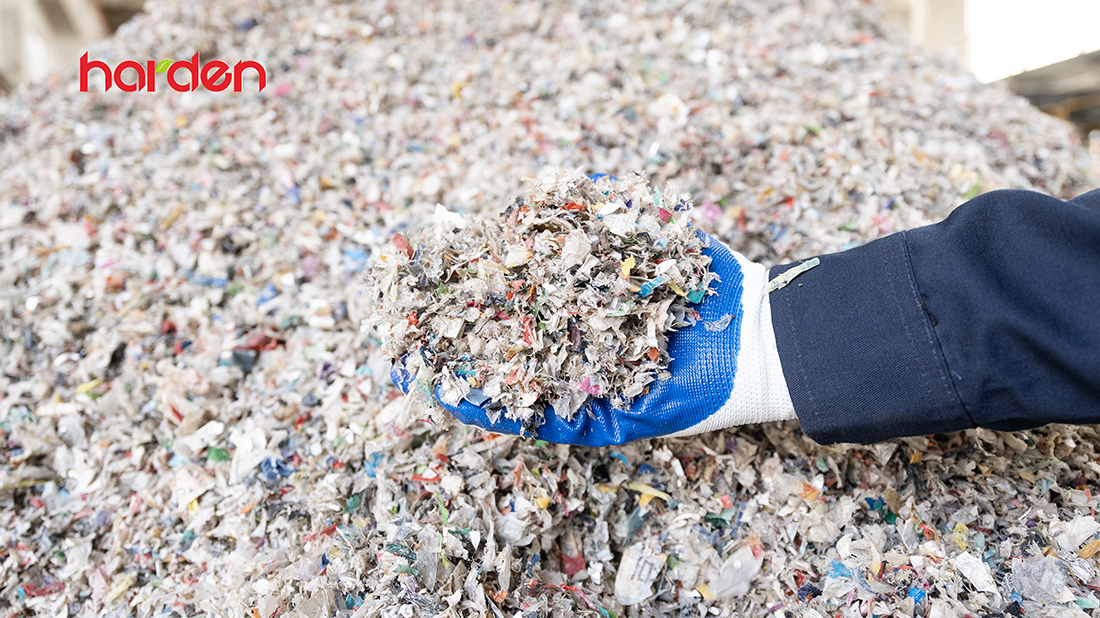
The processed fuel from the DSWS system features uniform particle size, low hazardous element content, and stable calorific value.
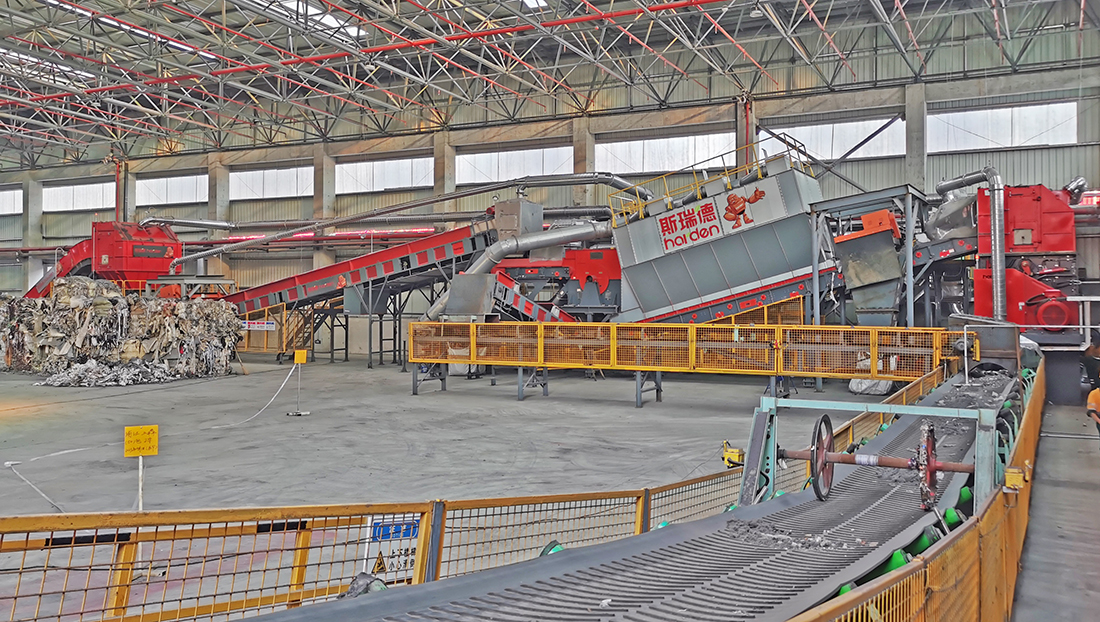
This maximizes the recycling rate across all solid waste categories, helping coal-consuming enterprises steadily increase their Thermal Substitution Rate (TSR). Ultimately, it enables the high-ratio, large-scale application of alternative fuels, unlocking higher fuel price premiums and carbon emission reduction benefits.
Conclusion
From micro-processing plants producing hundreds of tonnes per day, to large-scale fuel hubs producing 500 tonnes per day, and up to premium fuel production lines catering to high-end kilns—Harden leverages its 16 years of practical global project experience to precisely cover all real-world industry scenarios with three distinct, low-OPEX solutions.

Driven by intensifying solid waste recycling policies and the urgent need for carbon reduction in the cement sector, Harden will continue to innovate core alternative fuel preparation technologies.
By providing turn-key equipment that delivers lower operating costs and higher output quality, Harden empowers solid waste treatment enterprises to fortify their market competitiveness, working hand-in-hand with the entire value chain to build a new blueprint for the standardized and large-scale development of alternative fuels.
